Saturday, July 13, 2013

Budapest, Hungary

Budapest was one of my favorite cities on the trip, right behind Krakow! An aspect of the city’s geography I found interesting was regarding the Westend City Centre we went to. A group presented and this and I found all the information they shared with us interesting. We learned that the mall is very different than with everything was like under communism (Hungary was once controlled by the Nazis and then the Communists). It was built in 1999 and was different than anything Hungarians were used to. The mall is very “Westernized.” The stores are department stores, just like the ones we have in the United States. They have no Hungarian culture to them. We learned about the geography term “placelessness,” which means a person cannot tell where you are based on your surroundings. So if I did not know I was in Budapest ahead of time when I was in the mall, I would not have been able to know I was in Budapest from being in the mall.

 
My favorite academic experience was the Terror Museum. The museum gave such great information! I love going to the history museums in the cities we go to—it gives a good background to understand what the city has been through. I did not know much about the history of Budapest and I was intrigued by all it has been through! The building the museum was held in was once the headquarters of the Hungarian Nazis. Then, the communist terror organizations took over the building and it because the house of terror and dread. Hungary had a double occupation—first the Nazis, then the Communists. During this time, the parties were trying to go about with “ethnic cleansing.” This was what the Holocaust was about. It is so, so sad.


Another academic experience I enjoyed was going to a synagogue and the your we had! We learned that 300,000 Jews used to live in Budapest. Now, only 100,000 do. The same goes with the synagogues—there are much fewer than there used to be. Jews were forced to live in the ghetto of Budapest in inhumane conditions. Eventually many Jewish people were sent to Auschwitz. Of the few that survived, it took them 2-3 years to return to Budapest because they got no help getting there. When they returned, their properties had been taken over.

 
I also really enjoyed going to the Hungarian Folk concert! I didn’t think I would like this, but I ended up loving it! I enjoyed watching it so much better than watching an opera or orchestra play. It just seemed more REAL! The performers were having so much fun on stage, which made us enjoy it all that much more! I felt like this was a true cultural experience! I hope CETS does this again next year—it wasn’t originally on our schedule. I would definitely recommend it!


My favorite extra-curricular experience was going to the Budapest Baths! The time we spend in Budapest was HOT! The baths were a perfect way to cool down after a long hot day. We went to the same bath two different days and stayed in the outdoor one. They were so nice!

If the group stays in the same hostel again next year, I would recommend eating around the corner at The Turning Point Café. It was close and had good service and food!


The hostel room Jordan and I shared...it was hot!

Vienna, Austria

An aspect I found interesting of Vienna’s geography was in the area outside of Vienna—the Wachau Valley area. This is such a beautiful area of Austria, complete with rolling hills alongside a beautiful river. The hills actually make the area what it is used for today—vineyards. Actually, we learned this area of Vienna has been growing grapes for years and years to make wine. Because of the hills, soil, and sunlight, there is the perfect environment for grape growth. This makes Austria a top wine producer of the world! The people that live in the Wachau Valley area revolve their lives around producing wine. Growing grapes and producing wine are their careers! It’s a major business for this area and the natural environment makes this possible.


My favorite academic experience in Vienna was definitely the bike tour through the Wachau Valley. At first, I didn’t think this was considered an “academic” experience. But, it definitely was! We not only rode through the beautiful countryside of Vienna and stopped to drink wine, but we also learned all about the culture of grape growing! The was one of my favorite days of the trip. I like biking in general, so biking through this gorgeous valley just made it all that more better!


My favorite extra-curricular activity in Vienna was the Prater, which is an amusement park. A group of us stopped there one night and rode a few rides! Being here reminded me so much of the United States—they were even playing U.S. music. It made me realize that no matter where are you, people are people. People, no matter where you live, enjoy many of the same joys in life. It was fun and a good bonding experience!


For meals in Vienna, I would recommend not going to a nice looking restaurant in the main area of the city! We went to a restaurant that looked fairly nice. We could tell we were not welcomed, though. The waiter seemed like he didn’t want us there after we said we did not have a reservation, but he seated us anyways. The food was a little more expensive and was not very good. Vienna is a good place to go cheap! I would recommend grabbing food at the grocery store for a dinner or going to a café or coffee shop instead! Or, I would recommend eating at the Prater to get the full experience!

Brno, Czech Republic

Brno’s demography of where people live in the city is very interesting to me. There is segregation of the majority population and the Roma people (not by law necessarily). We learned that most of the Roma people that live in Brno live away from the majority population—the Roma people live in the “ghetto” of the city. There are 4 different schools Roma children go to—85% of those schools consist of Roma children. If Roma people try to move out of the ghetto, they are not able to. Relators discriminate against Roma people. This is all segregation, even if it isn’t by law. It reminds me of the United States. There is still segregation of people of color and white people. People of color are still discriminated against in areas of housing, school, work, and basically all aspects of life. This is an aspect of Brno’s geography that is very messed up, but it is a continuous cycle.

My favorite academic experience in Brno was definitely the Roma Museum. We were provided a guided tour which was great, but the discussion with the social worker afterwards was fascinating. The tour provided us with information of past oppression of the Roma people and the Roma culture, whereas the social worker provided information on the status of the Roma people today. Above, I discussed how the Roma people are segregated in living and school systems. 85% of the schools the Roma children attend are Roma students. Yet, most, if not all, the teachers are non-Roma. They are part of the majority population. This in itself is messed up, especially considering many of the teachers discriminate and are prejudices to the Roma population. On top of this, the Roma children are brought up speaking a different language than the majority population. Yet, once they get to school, they are expected to speak the dominant language. Because the children cannot, many are viewed as having lower intelligence levels, which is absolutely not true. The social worker even said some Roma students were put into special education classes, not because they needed it, but because they were assumed to need it. In reality, there is just a language barrier. On top of all of this, many Roma children cannot get into kindergarten—already putting them behind of the majority population. All of this is a continuing cycle. If the Roma students are basically set up for failure, there is no way they are going to be able to get themselves out of poverty. The physiological consequences of the teachers having negative views on their own students is huge! If a teacher doesn’t believe in an individual student, especially at a young age, that student is going to grow up believing what the teacher thought of him or her. It is internalized. The social worker also mentioned how in history textbooks, there is exactly  sentence saying the Roma people were discriminated and killed during the Holocaust. 1 sentence. That is so, so messed up. The mainstream society just ignores it! no wonder the oppression of the Roma people continues the way it does today—students aren’t even educated about it.

My favorite extra-curricular activity in Brno was going to the lake and relaxing. The majority of our group took the tram there the first day we arrived. We just set out towels down and had a nice, relaxing afternoon.

The food in Brno is cheaper than many of the places we have been to! I would recommend eating at Adria Restaurant, which is close to the city square. It was cheap and delicious! We all got some sort of pizza or pasta. Plus, the waiter was really nice!

Friday, July 12, 2013

Prague, Czech Republic

A fascinating aspect of geography in Prague is the demography of where and how people live. In the Midwest, we are used to people living in both houses and apartments. Within a large city, many people live in apartments. In smaller towns and suburbs, most people live in houses. In the Czech Republic, 1/3 of the population lives in large housing complexes in apartment form. We saw one of these complexes in Prague where 100,000 people live. This blows my mind. Living space is sued differently in Prague. They use less land space for housing and build vertically instead. In the United States, we use so much space for individual houses and yards. This makes sense for the size of Czech Republic, though. It is very small compared to the size of the United States—it’s about the size of 1 of our states. These apartment complexes allow people to live in smaller spaces.

Nove Butovice Community

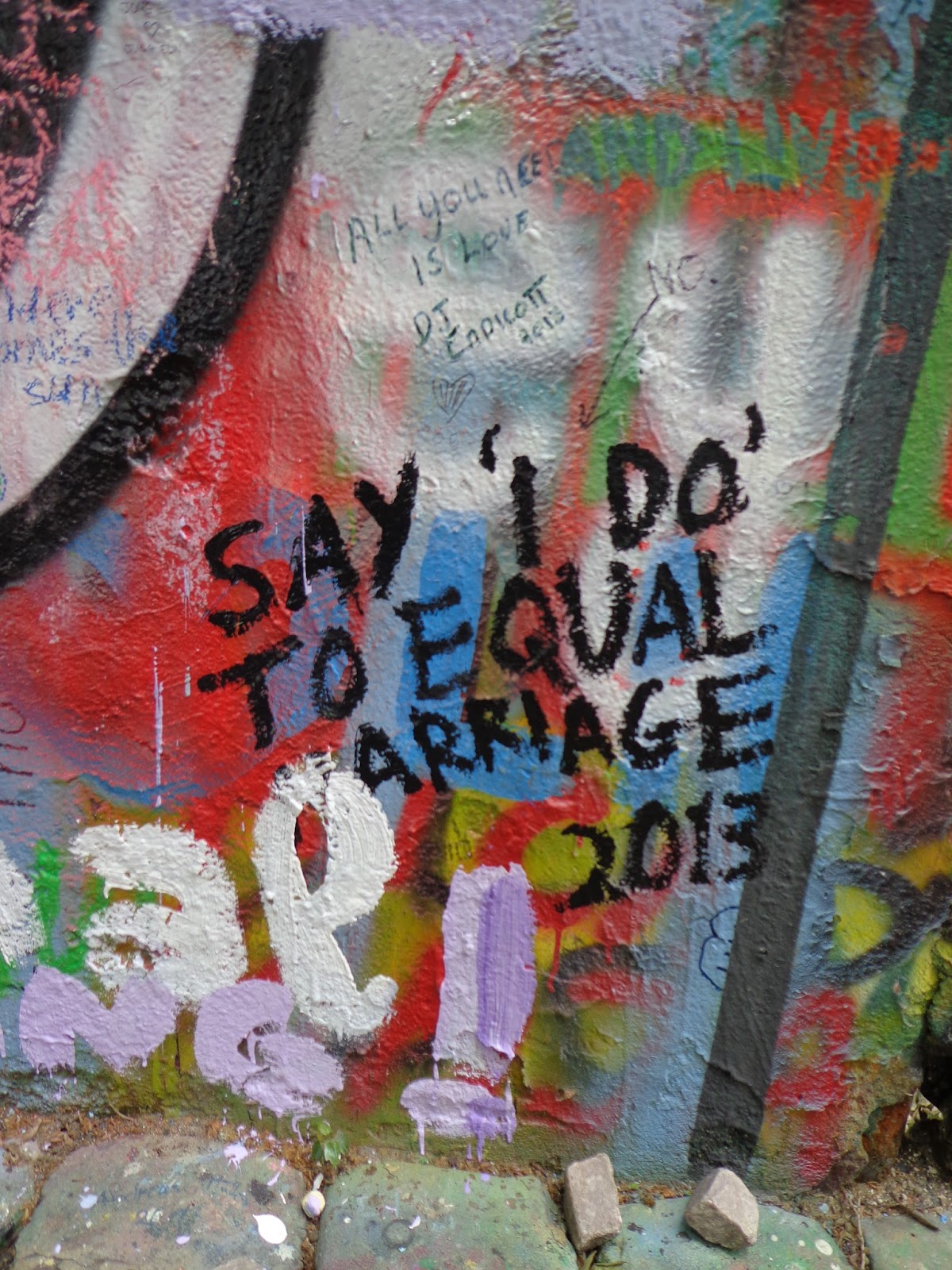
My two favorite academic experiences in Prague were the John Lennon Wall and the Nove Butovice Community. Lennon’s songs have such good meanings, especially Imagine. The song promotes peace, love, sharing, getting along, no war, etc. I love this song and the meaning behind it. It has everything I stand for. Because of this, it was so awesome to see. I love how people from all over the world come to out their artwork on it as a symbol of people. The song Imagine was created in the late 80s, I believe, when communism was still strong in this area of Europe. The world still has many, many problems and injustices, so the message it sends is still very relevant today. I even noticed is said “Say ‘I do’ to equal marriage 2013.” I thought this was so cool!


I also enjoyed going to the Nove Butovice Community, which is in the suburbs of Prague. I was amazed by this apartment complex. 100,000 people live in this specific complex and 1/3 of the whole Czech Republic population lives in complexes just like this. The complex was built by the communists to promote equality—both the poor and rich would live in the same type of housing. The communists no longer control this, but people still continue to live in them. There have actually been more and more buildings built very similar to these. It seems like a good idea, but at the same time people are losing their individuality. Everything is the same.
Nove Butovice Community

As for eating, I would recommend eating at Martin’s Irish Pub, right next to the hostel! It had delicious pasta and beer! It also had a cute environment!

Dresden, Germany

A fascinating geography aspect of Dresden is that most of the city was destroyed in bombings of WWII. I learned that the Allies bombed Dresden when the war basically over to “teach them a lesson.” The Allies (including the U.S.) killed many innocent civilians and they had no reason for doing so—the war was over. Most of the buildings in Dresden have been restored. Many of them look similar to how they looked before the bombing. It is an interesting combination with the buildings that were built more recently. The view from the sky bar in our hostel gave me a good sense of this. I saw many buildings that looked very old (when in fact they were just restores), mixed with newer looking ones that to me, looked more “boring.”

This sideof the chirch is the new, the back side is the original (what was left of it after the bombing)

My favorite academic experience in Dresden was visiting the Kusthof Passage and the walk there. We were told to walk through the area without talking, which I really enjoyed. It allowed me to fully take in the surroundings. I notices how calm and quiet the area was. There were people talking, but it still was a very calming area. I noticed there was graffiti—which is a socially acceptable form of art in Europe (well, in certain areas). Once we got to the passage, we saw a device attached to the outside of a building that makes music when it rains. It was raining while we were there, but not hard enough. I really enjoyed this area of Dresden. It felt like an old little village to me. It was nice to see artwork that was made by the store owners and was completely unique to the area.


My favorite extra-curricular activity of the city was just hanging out with fellow students in the sky bar of our hostel. It was a nice bonding experience and had a wonderful view of the city.
Hannah and I hanging out in the sky bar of our hostel

I would recommend to future students to eat at Restaurant Zur Franenirche in New Mark. This was a fancier restaurant with a nice view of the old looking buildings.


You can see Frauenkirche in the background!

Dessau and Leipzig, Germany

Dessau and Leipzig were both great cities to visit. In both cities, I noticed there wasn’t as much public transportation as there was in Berlin. Part of this is because Berlin is a very, very large city. But, Leipzig still did rely on public transportation, just not to the degree Berlin did. In Leipzig, any people would drive to a certain point and walk into the city to go to work (the inner city). After their day was done, they would walk back to their car and drive home.

Another aspect of geography (cultural) is how important music was in Leipzig. We went to a couple different churches that Bach used to work in. Leipzig had a huge influence on music. It may have even helped provide the space for music to be what it is today—Bach and other musicians have influenced today’s music.


Bach Monument in front of church he used to conduct and play organ
My favorite academic experience in Leipzig was the Holocaust Memorial. The memorial consists of 140 chairs sitting in the middle of some random shops, restaurants, etc. The architect purposely put it here to represent how we haven’t come to terms with what happened and how the Holocaust and everything leading up to it was out of place and disorganized. The 140 chairs represent the 14,000 people that used to worship in the synagogue in that exact same spot. After the Night of Broken Glass happened, many Jews were soon expelled from Leipzig. This is crazy. I wonder how many Jews live in Leipzig or anywhere in Germany today I wonder if they would want to go back to the place they had once been rid from. Even if some choose to came back (the survivors), I’m sure they were and are probable still oppressed. People probably still have negative prejudices against the Jewish population. I think this is similar to slavery and the Jim Crow Laws in the United States—the United States still has a long way to go. I wonder if Jewish people are treated as equals today.

Holocaust Memorial

My favorite extra-curricular experience in Leipzig was when a group of us went back to St. Nicholas Church to listen to a church service. I was raised Lutheran, so it was cool to sit in on a service and hear the organ play.

 
For recommendations on where to eat in Leipzig, I would recommend going to a pizza and pasta place. They have many in the main part of the city! It’s cheapish and tastes good!
 

Berlin, Germany

Berlin’s geography had some differences from the United States, especially compared to Eau Claire or my hometown of Albert Lea, MN. Movement is a huge difference. In Berlin, the majority of people get around through public transportation. We got everywhere we needed to be through the U-Bahn and the S-Bahn. There were stops everywhere! U-Bahns are basically underground subways; S-Bahns are above ground. I saw kids, professionals, teenagers, elderly people, and even dogs on the public transportation systems. It is such a quick process—you hop on really quick and it leaves the station. There are many different lines, so people may have to transfer. Even with transferring, it is still a fairly quick and easy process. I was confused at first, but after a day or two I felt like I could get anywhere in the city. There is a huge reliance on public transportation, which is very different than in the Midwest here in the United States. In the Midwest, we all have our own car. In the Midwest, out mindsets are different. We all want our own car because it is more convenient and we like not having to rely on anyone else. It is interesting to me that their form of transportation takes up a different kind of space than what I am used to—Berlin uses underground space for public transportation.


My favorite academic experience in Berlin was the Jewish Museum, followed closely by the DDR Museum. Both museums gave me a great background on the history of the troubles Germany went through. The Jewish Museum had a lot of information about not only the Holocaust, but also how Jewish people have been oppressed for years and years. I learned a lot about the Jewish culture, which I’m very glad was included in the museum. The DDR Museum gave information about the life of the east side of the Berlin Wall when it was up. It is crazy how much control the party had over the people and how manipulative they were.


Jewish Museum before Nazis closed it


New Jewish Museum


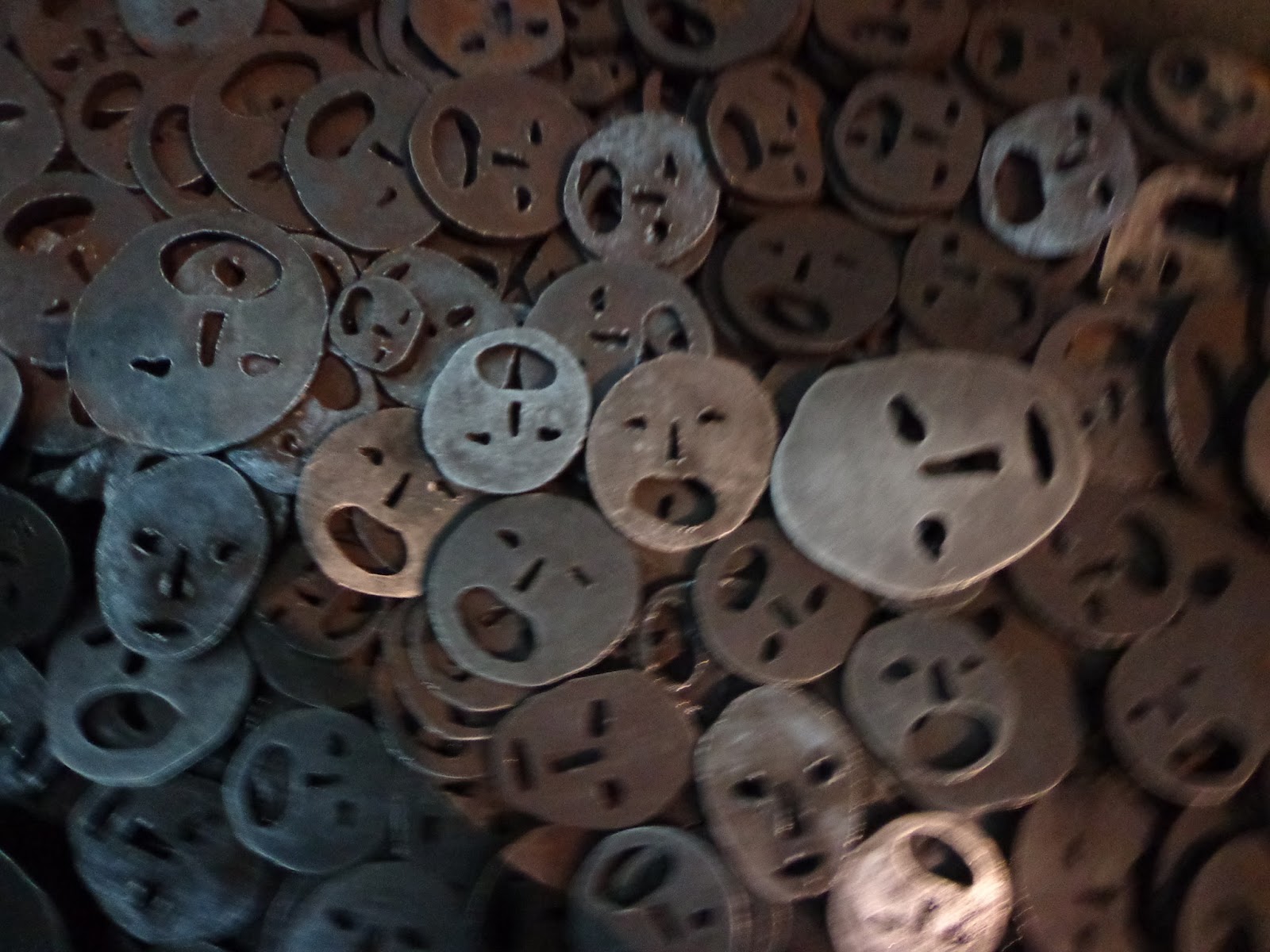
"Fallen Leaves" in the Memory Void of the Jewish Museum. These 10,000 faces are dedicated to all the innocent victims of war and violence.


 My favorite extra-curricular experience in Berlin was going to the East Side Gallery of the Berlin Wall. The whole story behind the Berlin Wall just blows my mind. It was a little eerie to be standing next to the wall, knowing it was used to trap people and that people were killed trying to get over the wall. The East Side Gallery has a large part of the wall still standing, complete with meaningful graffiti. They are trying to build a condo and tear down part of the wall, so people have been protesting this. I agree with the protestors. I think they need to keep the wall up as a remembrance of the terribleness of it and to help prevent something like this from happening again, I also find it fascinating that all around Berlin, you can see a certain kind of cobblestone that used to be where the wall was. It really helps put it into perspective that a literal, cement wall used to be separating the two sides of the city. Going to the East Side Gallery was optional for us and I am very glad I went. I would recommend for future years to make it required—I think everyone needs to see this!


As for places to eat in Berlin, I would recommend trying gelato anywhere they have it! Gelato is very similar to ice cream, but you have to try it while you’re in Europe! There was a place fairly close to our hostel we stayed at. Otherwise, there are many gelato stands about all the Bahn and train stations! Yum!